What is Functional Neurology?
A Brain-Based Approach to Health and Rehabilitation
When most people think about traditional neurological care, they think about diagnosing diseases of the brain and aggressive surgical procedures or medications to manage symptoms. When people think about chiropractic care, they usually think about the spine as well as neck and back pain. Functional neurology sits at an interesting intersection between the two. Rather than looking only at where someone hurts or what diagnosis they have been given, a functional neurological approach asks a broader question: How is this person's nervous system functioning, and what can we do to help improve that function?
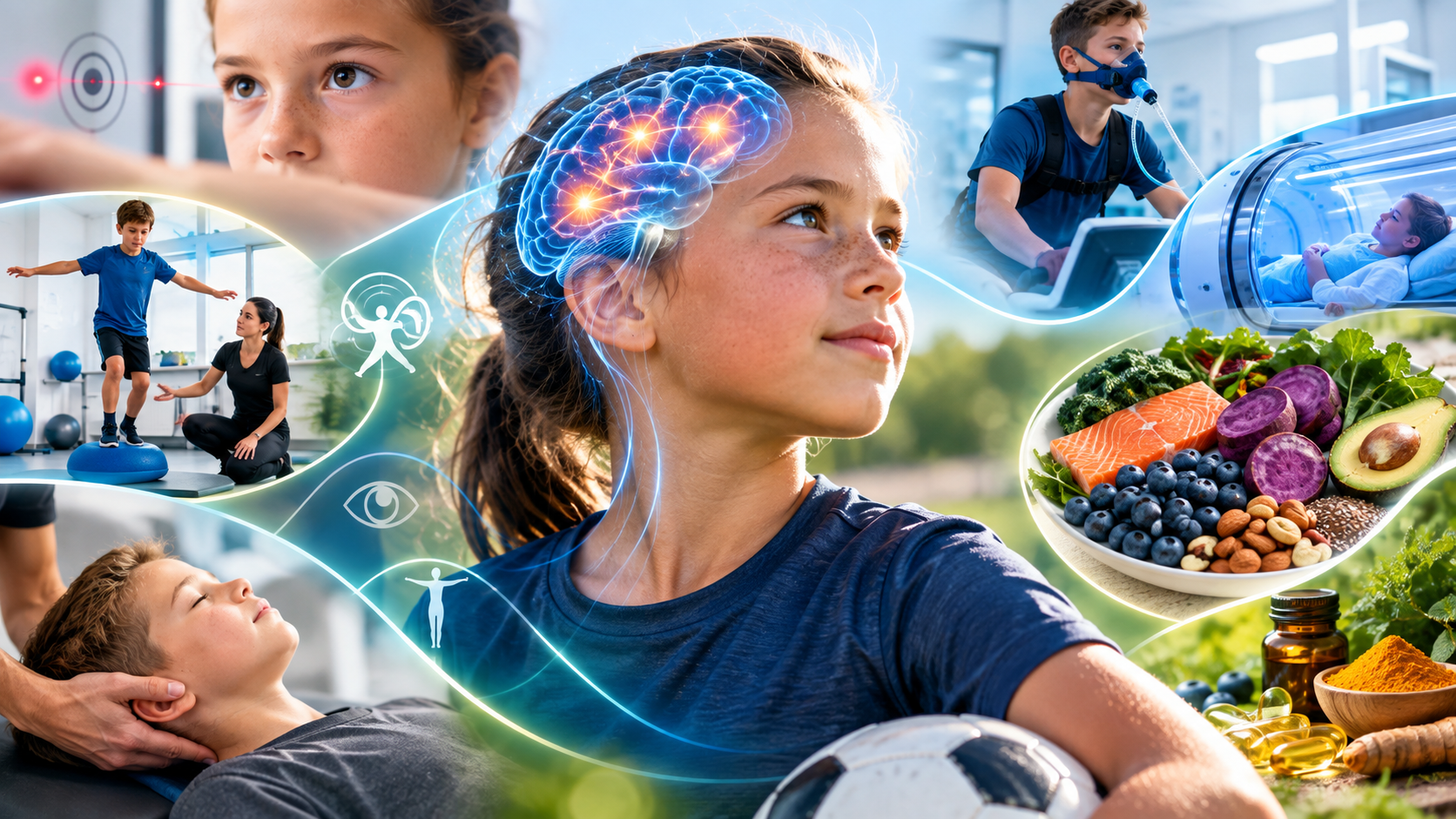
This may involve looking at eye movements, balance, coordination, vestibular function, sensation, movement, reflexes, gait, autonomic responses, and other aspects of neurological performance. Rehabilitation can then use appropriately selected movement, visual, vestibular, sensory, cognitive, and musculoskeletal inputs to aid the nervous system. At the center of this approach is one of the most fascinating characteristics of the human brain: it can adapt, and that ability is known as neuroplasticity.
Your Brain Works as a Network
The brain is often described as if it were a collection of separate compartments. The cerebellum controls balance. The frontal lobe controls attention. The vestibular system controls equilibrium. The autonomic nervous system controls stress. In reality, the nervous system is far more interconnected.
Imagine walking through a crowded airport. Your visual system is tracking people and objects around you while your vestibular system senses movement of your head. Sensory receptors in your muscles and joints provide information about the position of your body. Your brain predicts where you're going, coordinates your legs, stabilizes your eyes as your head moves, maintains your balance, filters irrelevant sensory information, and changes your movement if someone suddenly steps in front of you. You don't consciously calculate any of this. Networks throughout your nervous system are communicating and adapting in real time. This provides a useful framework for neurological rehabilitation. Instead of simply asking “Where are the symptoms?”, we can also ask, “Which functions are impaired, and which systems contribute to those functions?”
So, What Exactly Is Functional Neurology?
Functional neurology, sometimes called chiropractic neurology, is a clinical approach that applies concepts from neuroscience, neurological examination, and rehabilitation to problems involving nervous-system function. It developed substantially within the chiropractic profession, with some chiropractors pursuing postgraduate education in neurological examination and rehabilitation in addition to their musculoskeletal training.
A functional neurological examination may look at the way a person's eyes track a target, how accurately they move their eyes between two points, how well their vision remains stable while their head moves, how they balance under different sensory conditions, how they walk, how their limbs coordinate, and how they respond as a task becomes increasingly difficult.
Treatment may then incorporate different combinations of movement, vestibular exercises, gaze-stability exercises, balance challenges, coordination tasks, sensory stimulation, physical exercise, and manual therapy depending on the findings of the examination.
The underlying concept is fairly straightforward: the nervous system changes in response to experience.
Many individual rehabilitation strategies that may be incorporated into a brain-based program have independent evidence supporting their use for specific conditions. Vestibular rehabilitation, graded exercise, balance training, strength training, motor learning, and task-specific rehabilitation are examples.
Neuroplasticity: The Foundation of Brain-Based Rehabilitation
Neuroplasticity describes the nervous system's ability to change its function, connections, and sometimes structure in response to experience. Every time you learn a new skill, practice a movement, improve your balance, learn an instrument, or become more coordinated at a sport, your nervous system is adapting. Neurological rehabilitation attempts to use that principle intentionally. Consider someone who has difficulty stabilizing their vision while moving their head because of a vestibular disorder. Rather than simply telling that person that their vestibular system is impaired, rehabilitation may repeatedly expose the nervous system to carefully selected head and eye movements. The challenge can then be progressed as the person improves. Over time, repeated practice may help the nervous system compensate or adapt. Vestibular rehabilitation provides a particularly good example because clinical practice guidelines support its use for appropriately diagnosed peripheral vestibular hypofunction.
But there is another important principle here: more stimulation isn't necessarily better stimulation.The nervous system needs the appropriate challenge, at an appropriate intensity, with enough repetition and enough recovery to promote useful adaptation.
It's similar to exercise. If you want to become stronger, randomly performing exercises for six hours isn't necessarily better than following a well-designed 45-minute strength program. The exercise, intensity, volume, progression, and recovery all matter. Neurological rehabilitation should be approached with the same mindset.
The Brain Depends on Information
Your brain doesn't directly experience the outside world. It receives information about it.
Your eyes provide visual information. Your vestibular system detects movement and orientation of your head. Sensory receptors throughout your muscles, joints, skin, and connective tissues provide information about touch, pressure, movement, and body position. Signals from inside your body provide information about your physiological state. The nervous system continuously integrates these streams of information and uses them to generate an appropriate response. A useful way of thinking about this process is:
Input → Integration → Output.
The nervous system receives information, processes it through interconnected neural networks, and produces an output. That output might be an eye movement, a change in posture, a step, a coordinated hand movement, a behavioral response, or a change in autonomic activity.
If an output isn't working well, one question worth asking is whether we can identify the systems contributing to that function and train them more effectively. This is why functional neurological examinations often spend considerable time evaluating the eyes, balance, vestibular system, coordination, and movement.
Why the Eyes and Balance Tell Us So Much
Patients are sometimes surprised by how much information can be gathered simply by observing eye movements.
A clinician may ask someone to follow a slowly moving target, rapidly look between two points, maintain fixation on a target while moving their head, or move their eyes inward toward a near object. These tasks examine different aspects of oculomotor and vestibular function.
Eye movements require precise coordination across multiple areas of the nervous system. Saccades—the rapid movements that shift your eyes from one target to another—use different neural circuitry from smooth pursuit, which allows you to follow a moving target. The vestibulo-ocular reflex helps stabilize vision while the head is moving, while vergence allows the eyes to coordinate when looking between near and distant objects.
Balance tells us something different but equally interesting. To remain upright, your brain must continuously combine information from vision, the vestibular system, and somatosensory information from the body. When you close your eyes, stand on an unstable surface, narrow your base of support, or move your head, you alter the sensory information available to the nervous system.
Rather than simply asking whether someone has “good” or “bad” balance, a neurological assessment can ask a more useful question: Under which conditions does their balance begin to break down? That information may help guide more targeted rehabilitation.
Where Does Chiropractic Fit In?
Chiropractic and functional neurology became connected partly because chiropractic has historically focused on the relationship between the musculoskeletal and nervous systems. Chiropractic functional neurology expanded that perspective by incorporating neurological examination and rehabilitation concepts alongside manual therapy. A modern explanation, however, needs to be more nuanced than saying that an adjustment simply “fixes the brain.” Manual therapy provides sensory input through joints, muscles, and surrounding tissues, and researchers have investigated whether spinal manipulation can produce measurable changes in nervous-system activity. Some studies have reported short-term neurophysiological changes following manipulation, but systematic reviews have also emphasized that the clinical significance of purported brain effects remains uncertain. That distinction is important. Producing a measurable neurological response is not automatically the same thing as producing a meaningful clinical improvement.
For that reason, I prefer to think of chiropractic care as one potential tool within a much larger neurological and musculoskeletal rehabilitation toolbox.
Depending on the person, a treatment plan might combine manual therapy with strength training, movement, balance exercises, vestibular rehabilitation, gaze-stability work, coordination challenges, breathing exercises, or other forms of rehabilitation. The adjustment doesn't necessarily have to be the entire intervention. It can be one input within a larger strategy designed around the person's function and goals.
What Can a Brain-Based Approach Help With?
This is where language matters.
Functional neurology should not be presented as a cure for neurological diseases, developmental disorders, or psychiatric conditions. Instead, brain-based rehabilitation may sometimes help address specific functional impairments associated with those conditions.
Someone experiencing vestibular dysfunction, for example, may need help improving gaze stability, balance, dizziness, or walking. Someone recovering from a concussion may benefit from appropriately prescribed graded physical activity or targeted vestibular, visual, cervical, or balance rehabilitation when clinically indicated as part of broader medical management.
For a child with developmental differences, the goal might be improving measurable functions such as balance, coordination, strength, motor skills, physical activity tolerance, or independence rather than claiming to “treat” the child's developmental diagnosis itself.
Likewise, someone living with a chronic neurological disorder may participate in rehabilitation designed to preserve or improve strength, mobility, coordination, balance, and independence.
This is an important distinction in the way I think about care:
Don't simply treat a diagnostic label. Identify the functions that matter to the person.
If a child's goal is greater independence, what skills are limiting independence? If an athlete wants to return to sport after injury, which systems are preventing that return? If someone becomes dizzy whenever they turn their head, can we identify why that particular task is difficult?
The diagnosis provides important information. But the individual's function determines what rehabilitation needs to accomplish.
Why a Holistic Approach Matters
The nervous system doesn't operate independently from the rest of the body, which is why I believe neurological health is best viewed through a broader whole-person framework.
Sleep affects attention, learning, recovery, and cognitive performance. Exercise influences cardiovascular, metabolic, musculoskeletal, and neurological health. Nutrition supplies the energy and nutrients required for normal cellular function. Pain can alter movement. Stress can influence sleep, attention, behavior, and autonomic physiology. Visual and vestibular problems can influence balance and movement. Musculoskeletal limitations can change the way someone interacts with their environment. None of these systems exists in isolation.
This doesn't mean that every symptom originates in the brain, nor does it mean that every health problem can be corrected by “stimulating” the nervous system. Instead, it means that brain function exists within a much larger biological system. A comprehensive approach to neurological health may therefore consider movement, sleep, nutrition, recovery, sensory function, musculoskeletal health, stress, environment, relationships, and appropriate medical care alongside targeted rehabilitation.
The Goal Is Better Function
Ultimately, functional neurological rehabilitation should not be about performing as many neurological exercises as possible. It should be about improving something that matters.
Can the person maintain their balance more effectively?
Can they stabilize their vision while moving their head?
Can they walk with greater confidence?
Can they coordinate a movement more accurately?
Can they tolerate a more challenging environment?
Can a child participate more independently in daily activities?
Can an athlete return to the activities they love?
These outcomes can be measured, reassessed, and used to guide what happens next.
A good rehabilitation program should therefore follow a simple cycle:
Assess. Intervene. Reassess. Progress.
If something isn't improving, the answer shouldn't automatically be more of the same treatment. The clinician should reconsider the hypothesis, modify the intervention, or determine whether referral or additional medical evaluation is appropriate.
That's what makes rehabilitation truly individualized.
The Weekly Reset
This week, try looking at your nervous system differently.
Stand on one leg and notice how much harder the task becomes when you close your eyes. Walk outside and notice how effortlessly your eyes, head, arms, and legs coordinate. Learn a new movement and pay attention to how awkward it initially feels before repetition begins making it smoother. Notice how differently your brain performs after a good night's sleep compared with a poor one. These are simple examples of something extraordinary happening every second of your life. Your nervous system is receiving information, integrating it, generating a response, evaluating what happened, and adapting. The goal isn't to obsess over “optimizing” every neurological pathway. It's to recognize that your brain and body are constantly communicating and that appropriate movement, challenge, sensory experience, recovery, and repetition can influence how that system functions.
The Big Idea
Functional neurology is best understood not as a magical treatment for every neurological condition, but as a brain-based framework for understanding function and designing rehabilitation. Its foundation is the remarkable ability of the nervous system to adapt in response to experience. But neuroplasticity alone doesn't prove that every neurological intervention works. The examination matters. The intervention matters. The evidence matters. The dose matters. And most importantly, the outcome matters.
Chiropractic care can fit within this model as one potential source of musculoskeletal and sensory input, but it does not have to stand alone. Manual therapy can be combined with movement, vestibular rehabilitation, visual exercises, balance training, coordination, strength, sleep, nutrition, recovery, and appropriate medical care depending on the needs of the individual. The goal isn't simply to stimulate the brain.
The goal is to understand the person in front of you, identify the functions limiting their life, and use the most appropriate tools available to help them function better.
That is the promise—and the responsibility—of taking a truly brain-based, whole-person approach to health.
Keep Exploring Your Brain + Nervous System
Your nervous system influences how you move, balance, perceive your environment, learn, adapt, and interact with the world around you.
That's why The Weekly Reset explores the connections between the brain, nervous system, development, nutrition, movement, and human performance.
Research + Further Reading
Hall CD, et al. Vestibular Rehabilitation for Peripheral Vestibular Hypofunction: An Updated Clinical Practice Guideline From the Academy of Neurologic Physical Therapy of the American Physical Therapy Association. Journal of Neurologic Physical Therapy. 2022.
Meyer AL, et al. Unravelling functional neurology: a scoping review of theories and clinical applications in a context of chiropractic manual therapy. Chiropractic & Manual Therapies. 2017.
Demortier M, et al. Unravelling functional neurology: a critical review of clinical research articles on the effect or benefit of the functional neurology approach. Chiropractic & Manual Therapies. 2018.
Meyer AL, et al. Unravelling functional neurology: does spinal manipulation have an effect on the brain? A systematic literature review. Chiropractic & Manual Therapies. 2019.
This article is for educational purposes only and is not intended to diagnose or treat disease, replace individualized medical care, or suggest that functional neurological rehabilitation can cure neurological or developmental conditions.
Many Blessings,
Dr. Austin Tchikatilov
The Weekly Reset