A Brain-Based Approach to ADHD
Supporting the Brain Beyond Behavior
ADHD is more than an attention problem. It is a disconnect in whole-brain conversations involving executive function, movement, sensory processing, the gut, inflammation, lifestyle, and the environment around a developing child.
When we think about ADHD, the conversation often starts with behavior. Why can't they sit still? Why aren't they listening? Why do they interrupt? Why does homework take two hours? Why can they focus intensely on a video game but struggle to stay with a worksheet for five minutes? But ADHD is not simply a child choosing not to pay attention.
It is a neurodevelopmental condition involving differences in the way multiple brain networks communicate, regulate attention, control impulses, process sensory information, and decide what information deserves priority. Brain-imaging research has identified differences across frontal and frontoparietal networks, the basal ganglia, insula, cingulate cortex and other regions involved in executive function and attention.That changes the question. Instead of only asking, "How do we control this behavior?" we can also ask: "How do we create an environment that helps this brain regulate, organize and function more effectively?"
The Prefrontal Cortex: The Brain's Filter
One of the most important regions to understand in ADHD is the prefrontal cortex.The frontal networks help us pause before acting, maintain attention, organize behavior, hold information in working memory, regulate emotions and suppress responses that are not appropriate for the situation. They also help the brain decide what not to pay attention to. Imagine sitting in a classroom while your teacher is talking. The air conditioner is humming. Someone behind you is tapping a pencil. A truck drives past the window. Your shirt tag is irritating your neck. Another student drops a book. A well-regulated executive system helps suppress most of those irrelevant signals so the teacher's voice stays at the center of attention. However, In ADHD, inhibitory control and the interaction among attentional networks can be way less efficient. Research has repeatedly found difficulties with response inhibition, working memory, vigilance and executive control, while studies of irrelevant-stimulus processing suggest that altered interactions between executive, salience and attentional networks may contribute to distractibility. So one goal of a brain-based approach is to create conditions that support better frontal regulation and better filtering of irrelevant information.
ADHD Is More Than a Dopamine Problem
Dopamine and norepinephrine are undeniably important in ADHD. That is one reason stimulant medications can be very effective for many children. But the biology surrounding ADHD is broader than one neurotransmitter. Researchers are also investigating sleep, stress physiology, motor development, sensory processing, immune signaling, nutrition, environmental exposures and the gut microbiome. One developing area of research is revolved around neuroinflammation or inflammation in the brain.
Inflammatory and immune differences have been identified in portions of the ADHD literature, which makes sense as an inflamed brain is not able to produce energy as efficiently. And if the brain does not have adequate energy, these networks cannot function optimally in order to focus properly on a task or inhibit irrelevant distractions. Sleep, nutrition, exercise, stress, environment and inflammation may modify how genetic vulnerabilities are expressed as well. That's why two children with the exact same diagnosis can look completely different. Excess dopaminergic activities are the absolute worst for these kiddos since it can disrupt reward circuitry in the brain and become a vicious cycle. Think high sugar foods and loads of screen time. Lastly, lower levels of norepinephrine can impair arousal and focus but instead of just supplying amphetamines which are a band-aid solution at best, we need to address underlying nutritional deficiencies and ask why there are imbalances in certain neurotransmitters in the first place.
The Gut-Brain Connection Matters
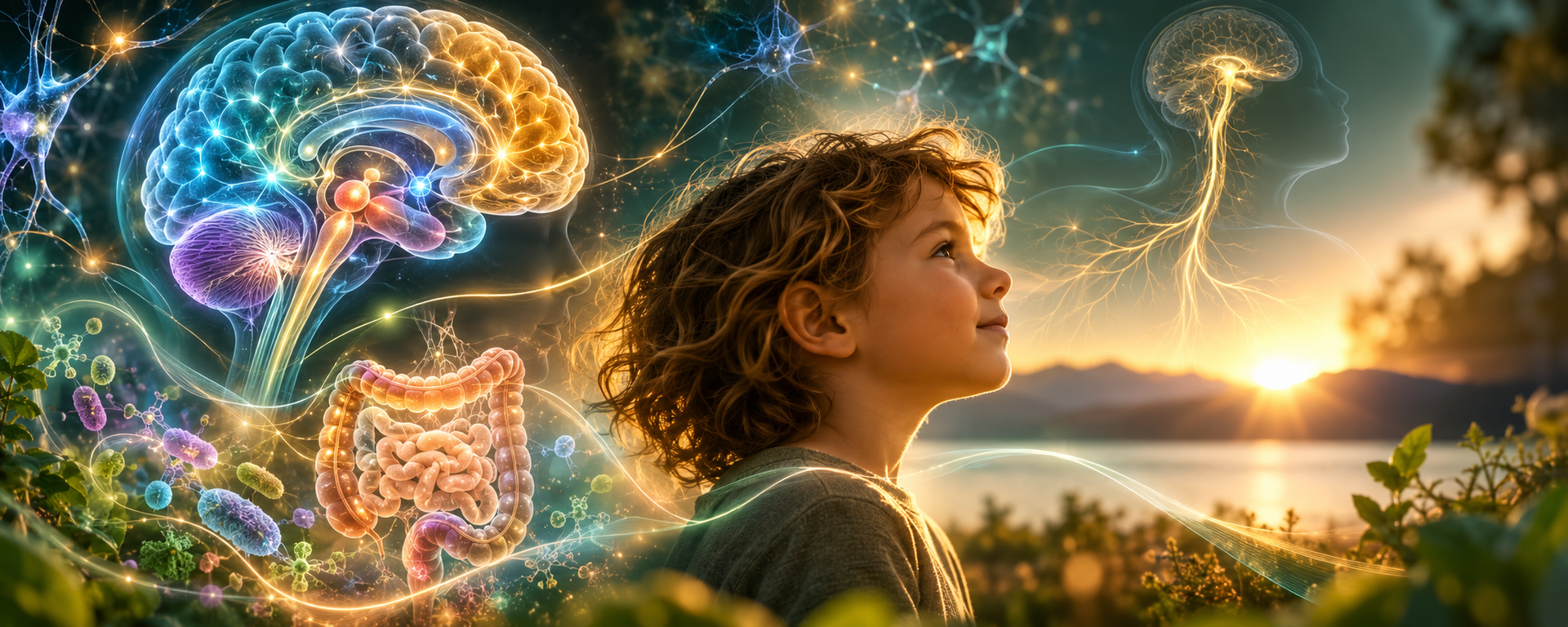
The digestive tract and brain constantly communicate through what is known as the gut-brain axis. Gut microbes produce metabolites such as short-chain fatty acids, interact with immune cells, influence intestinal barrier function and communicate indirectly with the nervous system through endocrine, metabolic, immune and neural pathways. Recent reviews have found differences in gut microbial composition in people with ADHD, although researchers are still determining which differences are meaningful and whether they contribute to ADHD, result from lifestyle differences associated with ADHD, or both. This does not mean that "fixing the gut necessarily cures ADHD," but supporting gastrointestinal and metabolic health may be one useful part of supporting the whole child.
Start by Removing Some of the Noise
For many families, one of the simplest places to begin is reducing foods that offer a tremendous amount of stimulation with very little nutritional value. That means decreasing added sugars, sugar-sweetened beverages, synthetic dyes and heavily ultra-processed foods while increasing real, nutrient-dense foods. The relationship between sugar and ADHD is more nuanced than the idea that "sugar causes hyperactivity." Sugar has not been established as a direct cause of ADHD. However, recent systematic reviews have found associations between high intakes of added sugars, refined carbohydrates and sugar-sweetened beverages and greater ADHD symptom burden. Artificial food colors are another interesting area as controlled research suggests that a subset of children may demonstrate behavioral improvements when certain synthetic colors are removed.
For parents, the takeaway is not to fear food, it is to simplify it.
Build meals around quality protein, colorful fruits and vegetables, healthy fats and fiber-rich whole-food carbohydrates. Eggs, meat, fish, berries, avocado, vegetables, nuts, seeds, legumes and other minimally processed foods provide raw materials needed for normal brain development.
Stable meals containing protein + healthy fat + fiber can also produce a very different metabolic environment than beginning the morning with juice, cereal and a pastry.
Nutrition Should Support the Brain, Not Become Another Supplement Drawer
Several nutrients are important for nervous-system function, including iron, zinc, magnesium, vitamin D, B vitamins, choline and omega-3 fatty acids, but more supplements are not automatically better.A recent systematic review of pediatric ADHD treatments found that nutritional interventions showed some overall benefit, but results were highly variable and no individual supplement consistently improved ADHD outcomes across studies. That is why I prefer a food-first, deficiency-second strategy. Improve dietary quality first. Then, when clinically appropriate, assess whether deficiencies, restricted eating, gastrointestinal problems or other health factors warrant more individualized nutritional evaluation.
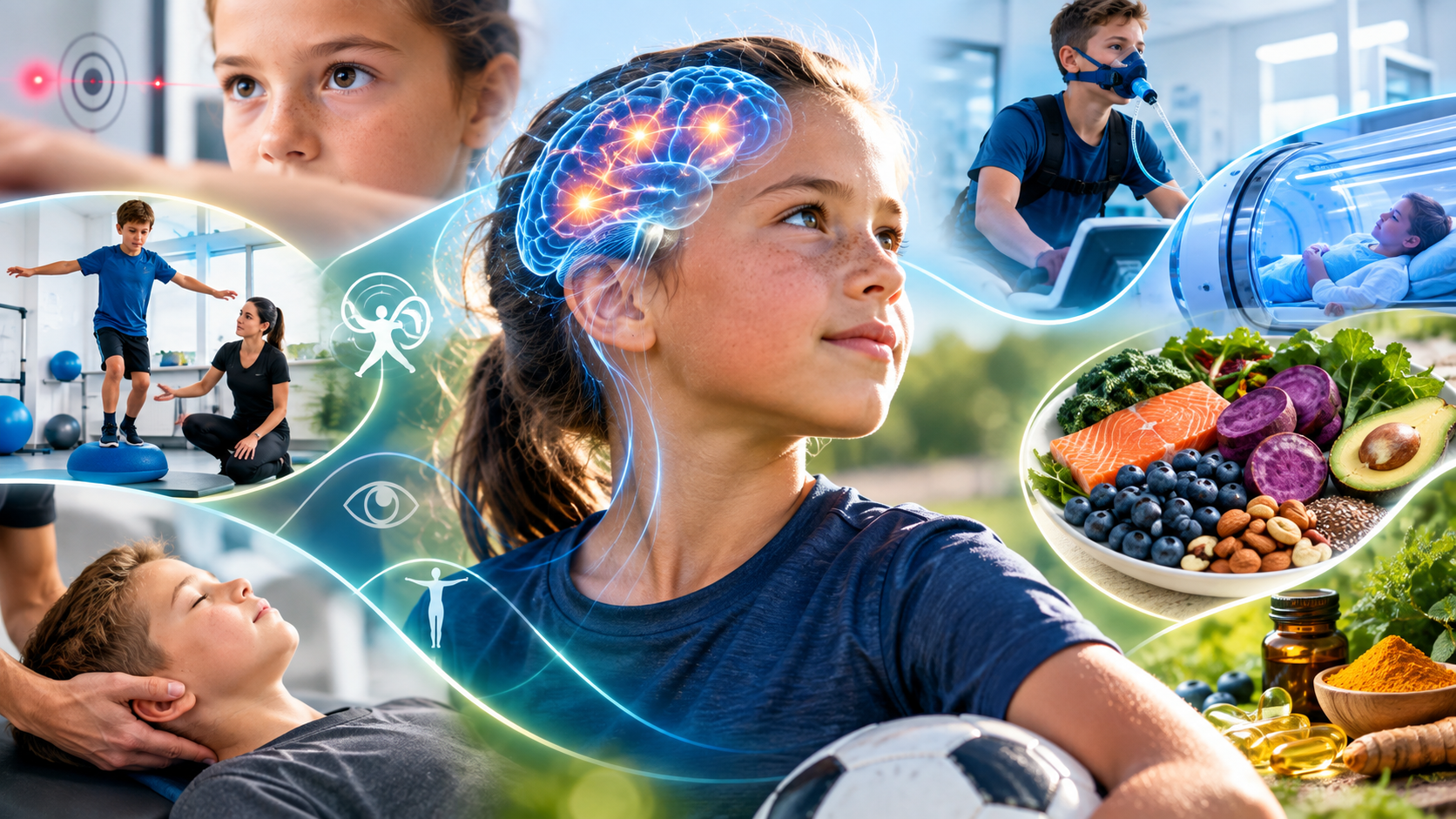
Train the Brain Through the Body
Attention does not occur in isolation from movement. Your eyes have to hold a target. Your vestibular system has to tell your brain where your head is in space. Your cerebellum has to predict and coordinate movement. Your sensory systems must continuously separate important information from background noise. Interestingly, children with ADHD demonstrate higher rates of motor difficulties than typically developing peers. A recent meta-analysis found differences involving manual dexterity, balance, locomotion and object-control skills.Eye-movement research has also demonstrated more errors during tasks requiring oculomotor inhibition—for example, resisting the reflex to look toward a distracting target.
This is fascinating because an anti-saccade task is essentially a neurological version of what a child with ADHD is asked to do throughout the day:
Something grabbed my attention. Can my frontal networks inhibit the automatic response and redirect me toward the goal?
This is where individualized neurorehabilitation can become interesting. When testing identifies actual deficits, rehabilitation may incorporate gaze stability, fixation, saccades, visual tracking, balance, coordination, dual-task activities, rhythm, reaction-time exercises and cognitively challenging movement. The goal is not simply to "wear the child out."The goal is to progressively challenge the nervous system to become more accurate, adaptable and efficient. Motor-based interventions can improve motor function in children with ADHD, and physical exercise appears capable of supporting executive function and ADHD symptoms as they increase blood flow to the prefrontal cortex and effectively increase neuroimmune functioning.
What About Chiropractic and the Brain?
Chiropractic care is another area that can greatly impact kids with adhd. Spinal manipulation changes sensory input entering the central nervous system, and researchers are investigating how those changes influence cortical processing and larger brain networks. Recent exploratory EEG research has reported changes in connectivity among the default mode, salience and central executive networks following chiropractic care. Essentially, chiropractic helps lessen the noise in the brain by providing high quality proprioceptive information to the central nervous system. Many kids with adhd have an overwhelming amount of information coming in and if there are restrictions in the neuromuscular system this can add insult to injury. Overall, manual therapies and chiropractic care may influence sensorimotor input and cortical processing, and it can be considered one supportive component of care when clinically appropriate—but the research specific to ADHD is still emerging.
The bigger concept is important:
The brain is constantly being shaped by the sensory information coming into it.
Movement, touch, vision, balance, joint position, sound and the environment all provide information that the nervous system has to interpret.
More Movement. More Nature. Less Passive Stimulation.
One of the most powerful interventions for a developing brain is also one of the most accessible:
Movement.
Running, climbing, throwing, catching, swimming, hiking, martial arts, gymnastics, strength training and outdoor play challenge the brain in ways that are extraordinarily difficult to reproduce on a screen.
Exercise requires timing.
Prediction.
Balance.
Reaction speed.
Visual tracking.
Spatial awareness.
Impulse control.
Motor planning.
And constant adaptation.
Recent evidence suggests structured physical activity can improve executive function and ADHD symptoms.
Nature may add another layer. A systematic review found that greater exposure to natural environments was consistently associated with lower ADHD symptom severity. At the same time, we need to look seriously at the amount and type of digital stimulation children receive.Heavy screen exposure and ADHD are associated with one another, and newer meta-analytic evidence reports higher ADHD-related risk or symptom burden among children with excessive screen exposure. Families must focus on protecting sleep, outdoor time, exercise, creative play and face-to-face interaction. A child's developing brain needs opportunities to be bored enough to create, move, explore and sustain attention without receiving a new dopamine-producing stimulus every few seconds.
Building a More Flexible Nervous System
Ultimately, I think the most useful way to view ADHD is not as a child with "too much energy."It is often a brain having difficulty regulating where that energy and attention go. The long-term goal is greater neurological flexibility: being able to activate when something matters, inhibit when something is irrelevant, transition between tasks, regulate emotion and return to a focused state after distraction.
For families wanting somewhere practical to begin, I would focus on six foundations:
- Build meals around protein, healthy fats, fiber and minimally processed foods while reducing excessive added sugar, dyes and ultra-processed foods.
- Protect consistent sleep and morning sunlight.
- Make vigorous movement and outdoor play part of every day.
- Replace portions of passive screen time with climbing, throwing, catching, building, drawing, music, imaginative play and face-to-face interaction.
- Evaluate vision, motor coordination, balance, sleep, learning difficulties and nutritional concerns when the clinical picture suggests they may be contributing.
- Chiropractic and manual therapy
ADHD deserves more than a behavioral label. These children are not simply "not trying hard enough." Their brains may process reward, inhibition, sensory information, movement and attention differently—and understanding those differences gives us more opportunities to support them.
Behavioral therapy and educational accommodations remain important evidence-based tools and can be transformative for many families.
But the conversation does not have to end there. We can also nourish the brain. Move the body.Challenge the brain. Protect its sleep. Support the gut. Reduce unnecessary environmental and digital noise. And give the developing nervous system the experiences it needs to become stronger, more adaptable and more resilient.
The goal isn't to change who a child is. It's to create the conditions that allow their brain to function at its best.
The Weekly Reset